Understanding Where Our Journey with God Begins
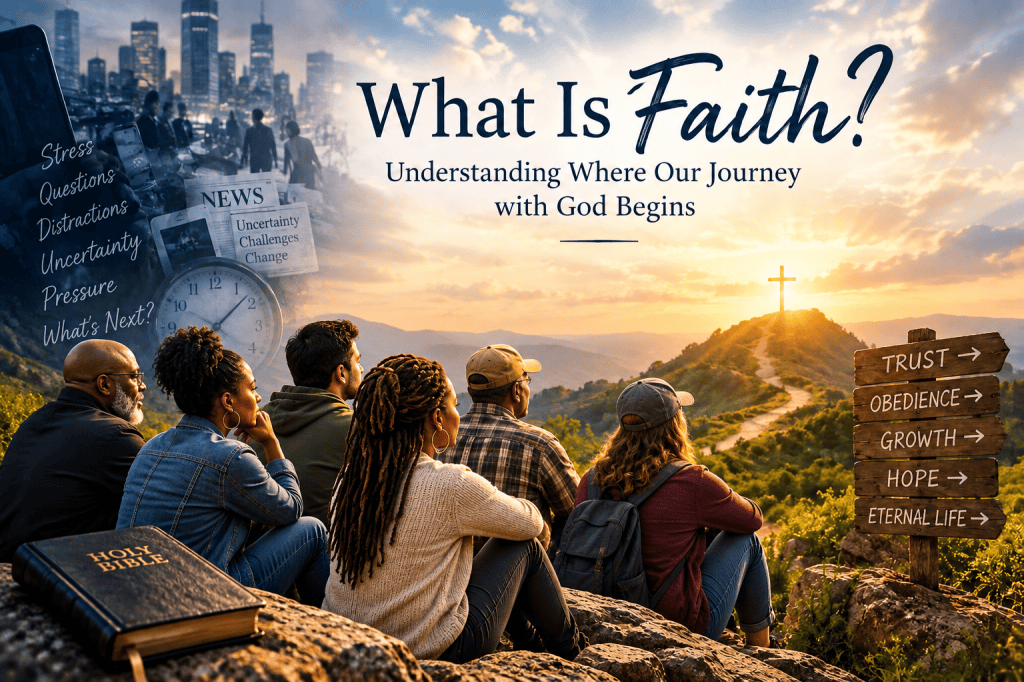
When I think about what faith actually means, I am reminded of the many things I heard about it from childhood through adulthood. All the while, I was trying to understand what faith truly meant and how it applied to my own life. Even when I began seriously studying the Bible, faith was not an easy concept to understand, much less explain. It is mentioned throughout Scripture and touches so many different aspects of our relationship with God that understanding its meaning can sometimes feel overwhelming.
I remember watching television ministries and listening to different teachers discuss faith in a variety of ways. Some focused on miracles and healing, while others emphasized prosperity and financial blessings. Faith seemed to be connected to just about everything, and the different explanations could be dizzying. I, too, remember hoping to understand how faith might influence different areas of my life, including my finances, health, and overall well-being. Yet, despite all I heard and read, I was not always sure that I fully grasped what faith really meant.
I suspect I am not alone in that experience. Perhaps some of you reading this have had similar questions. We hear so much about faith, are encouraged to exercise it, and are often reminded of its importance in our walk with God. But have we ever paused to ask ourselves a simple question: What is faith, really?
Today, I would like us to explore that question together. My goal is not to make faith more complicated than it needs to be, but to establish a simple starting point for understanding where our journey with the Lord begins. My hope is that, as we explore God’s Word together, we will gain a clearer understanding of faith and discover how that understanding can enrich our spiritual journey.
Preparing Our Hearts to Learn
Before we answer the question, “What is faith?” we must be willing to examine what we believe and how we came to believe it. Our understanding is often shaped by our upbringing, personal experiences, and the teachings of others. While these influences can help us grow, they can also leave us with assumptions we have never taken the time to examine.
As we begin this journey, let us approach God’s Word with humility and a willingness to learn.
Becoming Like Little Children
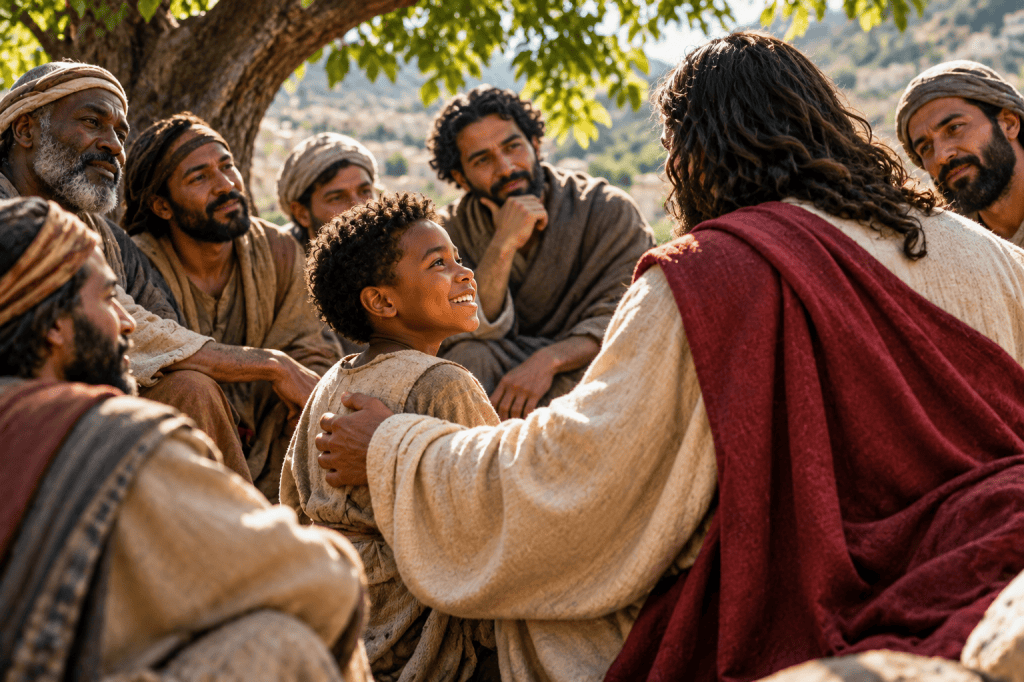
Jesus speaking to the Apostles and placing a child among them.
In Matthew 18:1, the disciples asked Jesus:
“Who is the greatest in the kingdom of heaven?” — Matthew 18:1 (KJV)
Jesus responded by placing a child among them and teaching them about humility:
“And said, Verily I say unto you, Except ye be converted, and become as little children, ye shall not enter into the kingdom of heaven.” — Matthew 18:3 (KJV)
The disciples approached Jesus with their own ideas about greatness, but Jesus challenged their perspective. His response reminds us that understanding God’s kingdom requires humility and a willingness to be taught.
As we explore faith, let us adopt that same humility. We need not discard everything we have learned, but we must remain willing to examine our understanding in the light of Scripture.
The Bereans: A Willingness to Examine
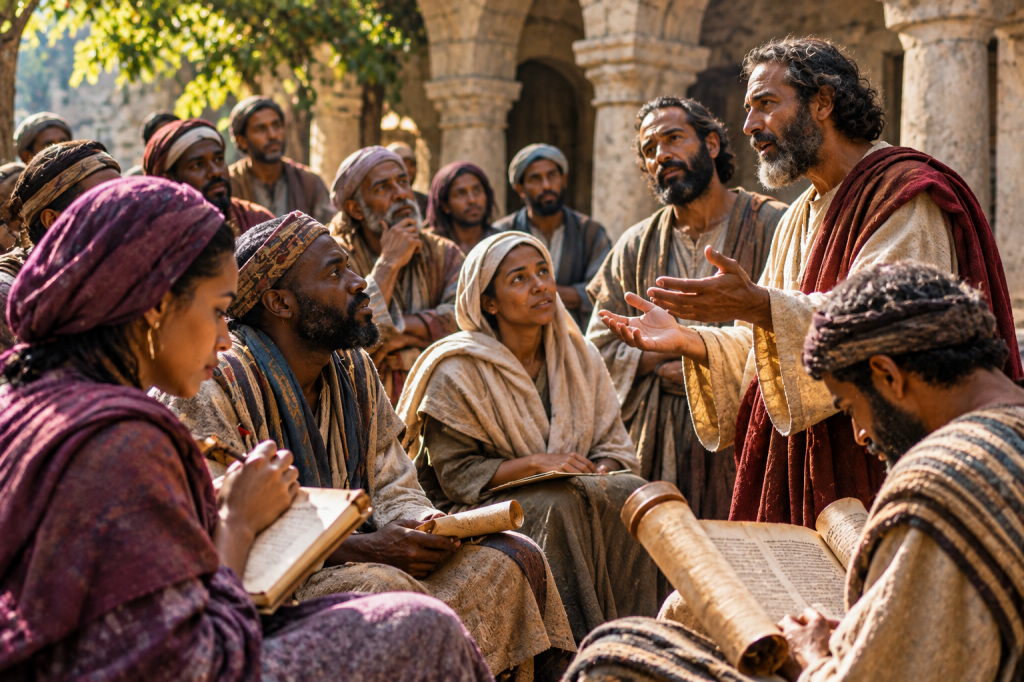
Apostle Paul speaking to the Bereans.
In Acts 17:11, we find an example of the people of Berea listening to Paul and Silas:
“These were more noble than those in Thessalonica, in that they received the word with all readiness of mind, and searched the scriptures daily, whether those things were so.” — Acts 17:11 (KJV)
The Bereans were willing to listen, but they also examined the Scriptures to determine whether what they heard was true. They demonstrated that an open heart and a discerning mind belong together.
Isn’t this a valuable lesson for us today? Let us appreciate the teachings of others while ensuring that our understanding remains grounded in God’s Word.
Now, Let Us Begin
As we move forward, let us be willing to learn, careful to examine, and open to a deeper understanding of what Scripture teaches.
We are not exploring faith simply to become more familiar with a biblical term. My hope is that we will develop a genuine desire to understand what faith means in our relationship with God and how it shapes the way we live.
So, let us begin with the question at the heart of this series:
What Is Faith?
Trusting God When We Cannot See the Way
The writer of Hebrews gives us a foundational description of faith:
“Now faith is the substance of things hoped for, the evidence of things not seen.” — Hebrews 11:1 (KJV)
This verse introduces two important ideas. Faith gives substance to our hope and provides assurance concerning what we cannot yet see.
But what does that mean for us? This is at the heart of our exploration.
Faith is more than wishing for a better tomorrow or believing that our circumstances will change.
Biblical faith begins with trust in God.
It is the confidence we develop in Him as we learn who He is, what He has revealed through His Word, and how He calls us to live.
Consider Abraham.
Abraham: Faith Requires a Step
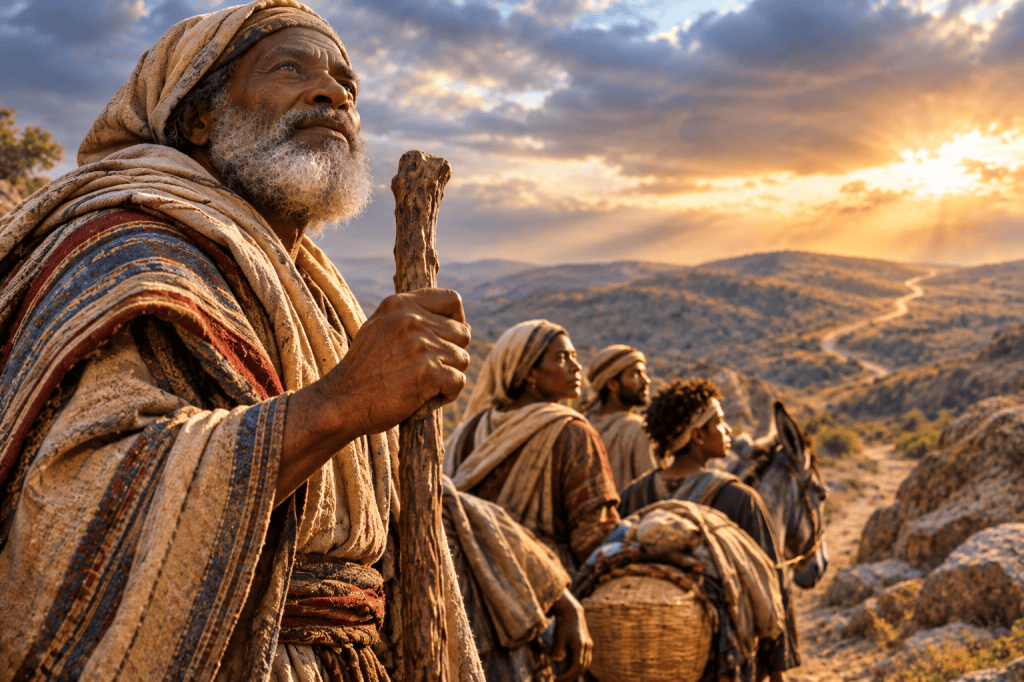
Abraham acting on faith following God’s instruction, leave thy country.
In Genesis 12:1, God gives Abram an instruction that would change the direction of his life:
“Now the LORD had said unto Abram, Get thee out of thy country, and from thy kindred, and from thy father’s house, unto a land that I will shew thee.” — Genesis 12:1 (KJV)
God called Abram to leave what was familiar and journey toward a place that had not yet been revealed to him.
How did Abram respond?
Genesis 12:4 tells us:
“So Abram departed, as the LORD had spoken unto him.” — Genesis 12:4 (KJV)
Abram acted on what God had told him, even though he did not yet know the full details of the journey.
The writer of Hebrews later reflects on this moment:
“By faith Abraham, when he was called to go out into a place which he should after receive for an inheritance, obeyed; and he went out, not knowing whither he went.” — Hebrews 11:8 (KJV)
Notice those words: “not knowing whither he went.”
Abraham did not have the entire journey mapped out before taking the first step. His response demonstrates that faith does not require us to know every detail before we obey God. Rather, it calls us to trust Him as we follow His direction, even when we do not yet know how the journey will unfold.
Sometimes, we want God to work according to our expectations or show us the destination before we are willing to move. We want every question answered and every uncertainty removed. Yet Abraham’s story reminds us that trusting God may require us to take the next step without seeing the whole picture.
This does not mean that every desire or idea we have is a direction from God. Abraham’s faith was a response to God’s specific instruction. Our responsibility is to seek God’s guidance, remain grounded in His Word, and be willing to respond faithfully.
Faith begins when we learn to trust God’s direction, even when we cannot yet see the entire journey.
Faith Is the Beginning, Not the End
Abraham’s story helps us understand that faith is not merely something we profess; it is something that shapes how we respond to God.
As we continue walking with Him, our understanding grows. We learn through Scripture, prayer, obedience, and our experiences in life. Over time, we have opportunities to recognize God’s faithfulness and develop a deeper understanding of His character.
We may not always know what God will do in a particular situation, but we can continue learning who He is.
That distinction matters. Faith does not promise that we will always understand our circumstances or receive the outcome we desire. Instead, it invites us to trust God through circumstances we cannot fully explain.
And perhaps this is where our journey truly begins—not with knowing every answer, but with learning to trust the One who walks with us.
Bringing It All Together
What Have We Learned About Faith?
As we conclude this first part of our journey, let us return to our original question: What is faith?
Hebrews 11:1 gives us our foundation. Abraham gives us an example of what faith can look like in practice.
Together, they help us recognize that faith is more than a thought, a feeling, or a hopeful expectation. Faith involves trusting God and responding to Him, even when we cannot see how everything will unfold.
We do not need to have every answer before we begin. Like Abraham, we may have to take one step at a time. As we continue learning through God’s Word and walking with Him, our understanding of His character can deepen, and our trust can mature.
This is the beginning of our journey: learning not only to believe in God, but also to grow in our understanding of the God in whom we believe.
In Those Moments, We Are, Who?
In those moments when the way forward is unclear, we are learning to trust.
When the answers do not come as quickly as we hoped, we are learning to wait.
When God calls us beyond what is familiar, we are learning to obey.
And when we cannot see the entire picture, we are learning that faith does not require us to know every step ahead. It calls us to trust God as we take the next faithful step.
We may not know everything that tomorrow holds, but we can continue to seek the One who holds us through it all.
Faith is not having every answer. It is learning to trust God as we walk toward them.
Let Us Pray.
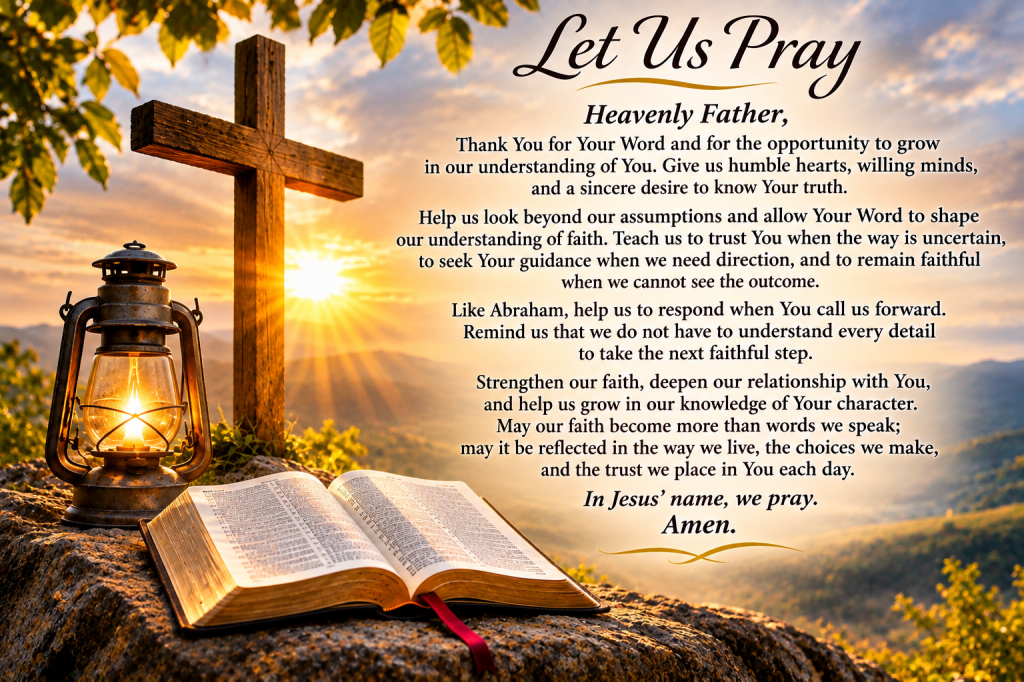
Until next time, may we continue to grow in faith, deepen our understanding of God’s Word, and trust Him one step at a time.
Remember, the Gospel is good news for all situations!


Leave a Reply